Market
Understanding Detroit
A market that rewards precision. Below is the thesis behind every opportunity we bring to the exchange.
The investment thesis
Below replacement cost
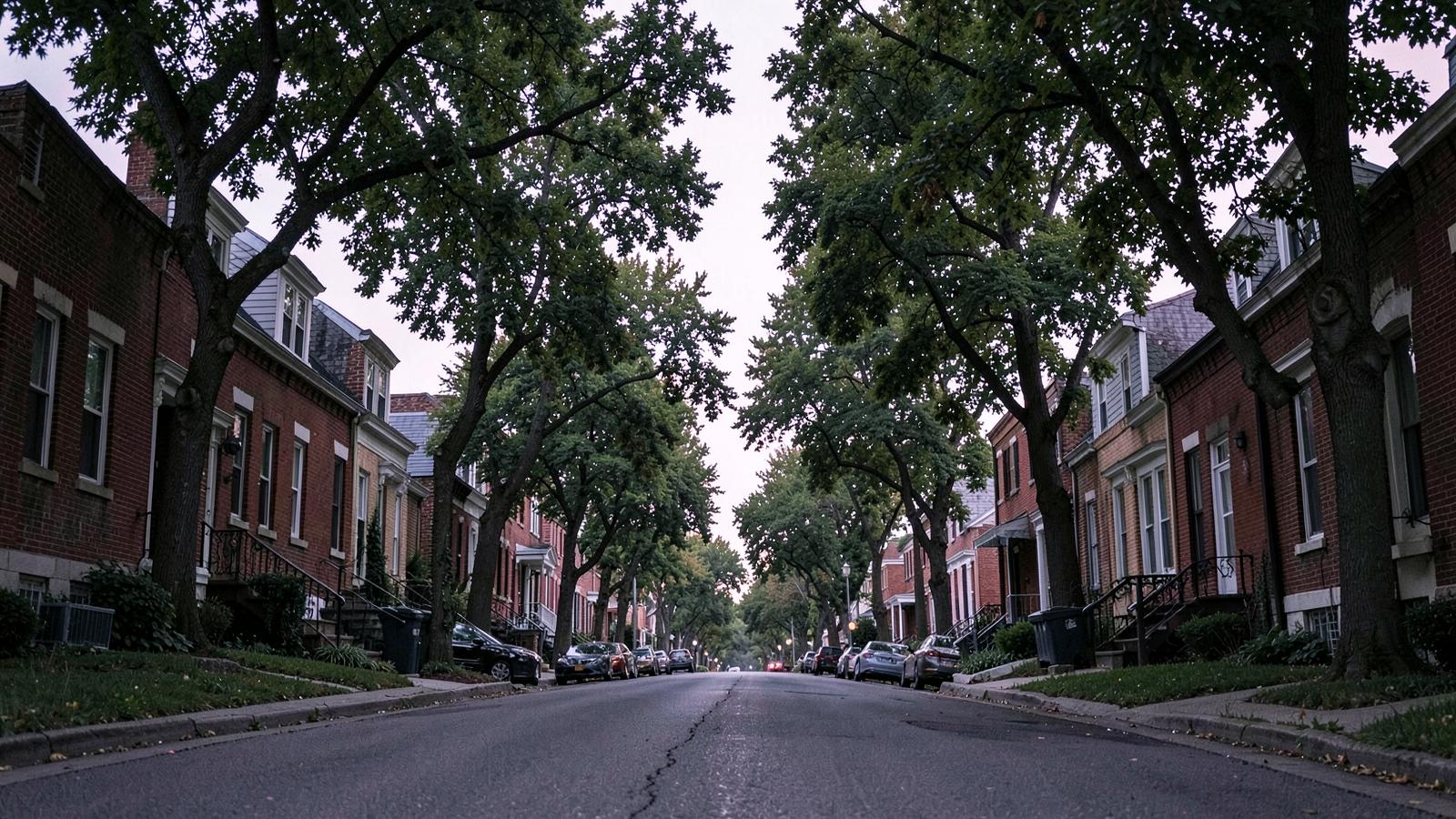
Solid pre-war brick housing regularly trades for a fraction of what equivalent new construction would cost today. That discount is the margin of safety.
Diversified employment
Health systems, universities, logistics, and a growing technology presence have broadened the employment base well beyond automotive manufacturing.
Rental demand depth
Well-renovated three-bedroom homes in stable districts lease quickly, particularly where school access and corridor proximity align.
Dispersion is the risk
The spread between an excellent block and a difficult one is wider in Detroit than in almost any comparable market. Selection, not exposure, drives outcomes.
Block-by-block
Districts we know well
We concentrate where housing stock, occupancy, and municipal conditions are strong enough to underwrite with confidence.
Grandmont–Rosedale
Five northwest districts known for organized neighborhood associations, brick Tudors and colonials, and unusually consistent owner-occupancy for the city.
Bagley
Adjacent to the Livernois Avenue of Fashion, with generous lots, walkable retail, and steady demand from households seeking larger pre-war homes.
East English Village
A tightly held historic district on the east side, with architectural review protections that have supported values through multiple cycles.
Projections are estimates for evaluation purposes and are not guarantees of performance. Buyers must complete independent due diligence.